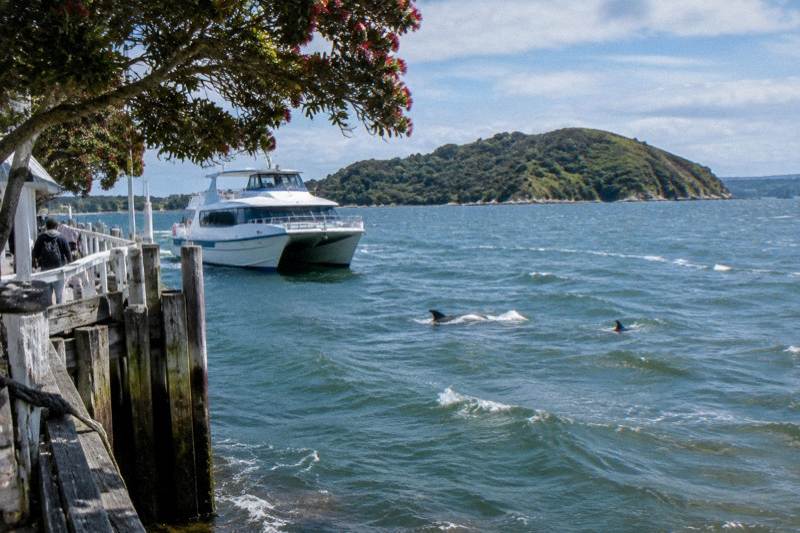
Why Can't You Swim With Dolphins Anymore?
Swimming with dolphins is not permitted in the Bay of Islands. Here is why the swims ended, what the sanctuary rules say, and how dolphin watching cruises from Paihia and Russell work today.
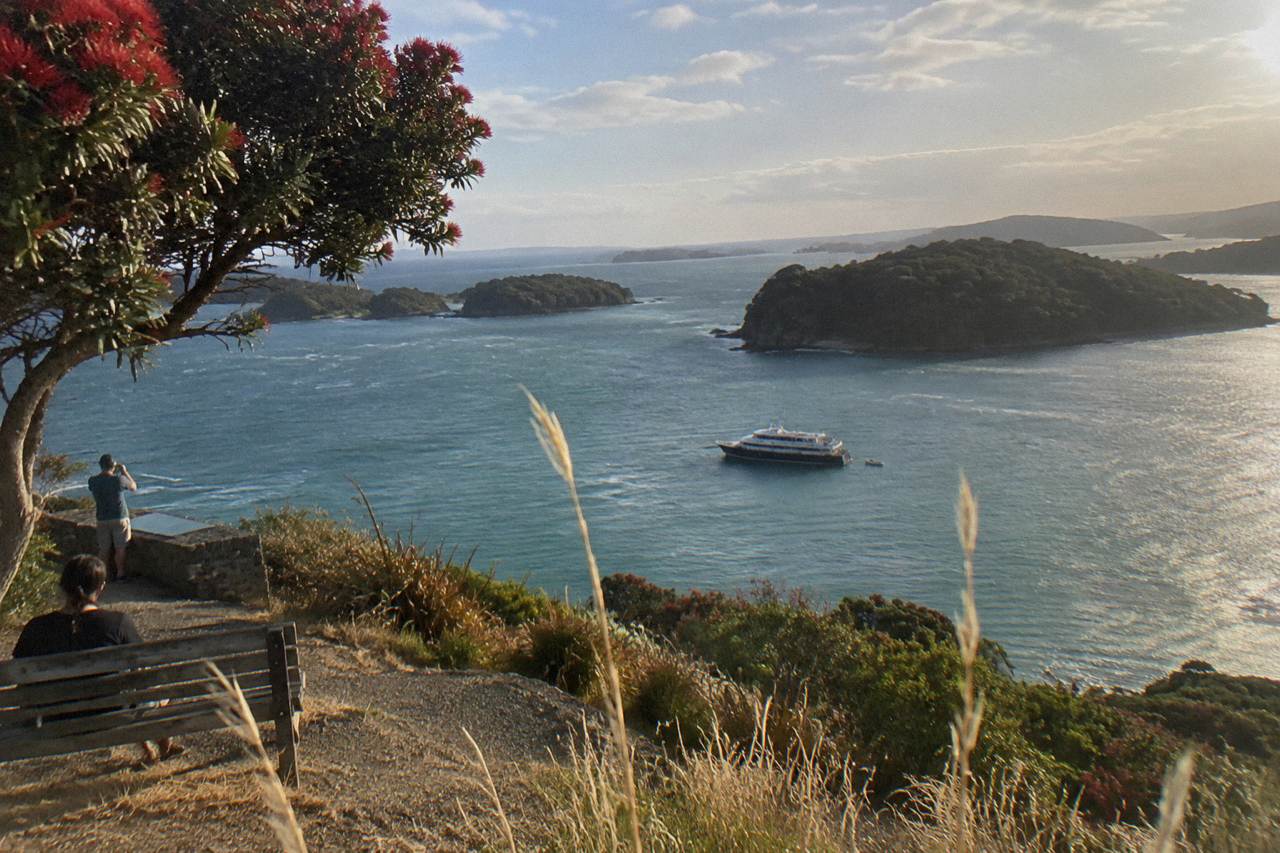
Swimming with dolphins is not permitted in the Bay of Islands. The Te Pewhairangi Marine Mammal Sanctuary, in effect since December 2021, keeps every person out of the water within 300 m of any dolphin, whale or seal, and it requires vessels to stop within that distance. The Department of Conservation states it plainly: no one is allowed in the water within 300 m of a marine mammal in this sanctuary. That single rule is why the swim tours of earlier decades have vanished, and why every dolphin cruise from Paihia and Russell today is a watching trip from the deck. If you're wondering which cruises still offer the best views, the guide to seeing dolphins in the Bay of Islands compares the options from Paihia and Russell.
The change did not arrive overnight. It followed a documented collapse in the local bottlenose dolphin population, a set of stricter commercial permit conditions in 2019, and finally a formal marine mammal sanctuary over the whole bay. Each step is on the public record, and each one narrowed what tour operators could offer until the swim was gone entirely.
This page walks through the full story: when the swims ended, what the sanctuary rules actually say, why the dolphin numbers fell, and what a Bay of Islands cruise offers now that the swim is off the table. The short version for anyone comparing tours today is simple. You watch dolphins from the boat. Any swim on a cruise happens at an island beach stop, and only when no marine mammal is within 300 m. If you're wondering what the rules mean for open-ocean swims elsewhere, the guide to swimming with wild dolphins safely and legally covers the penalties and the boat-based alternatives.
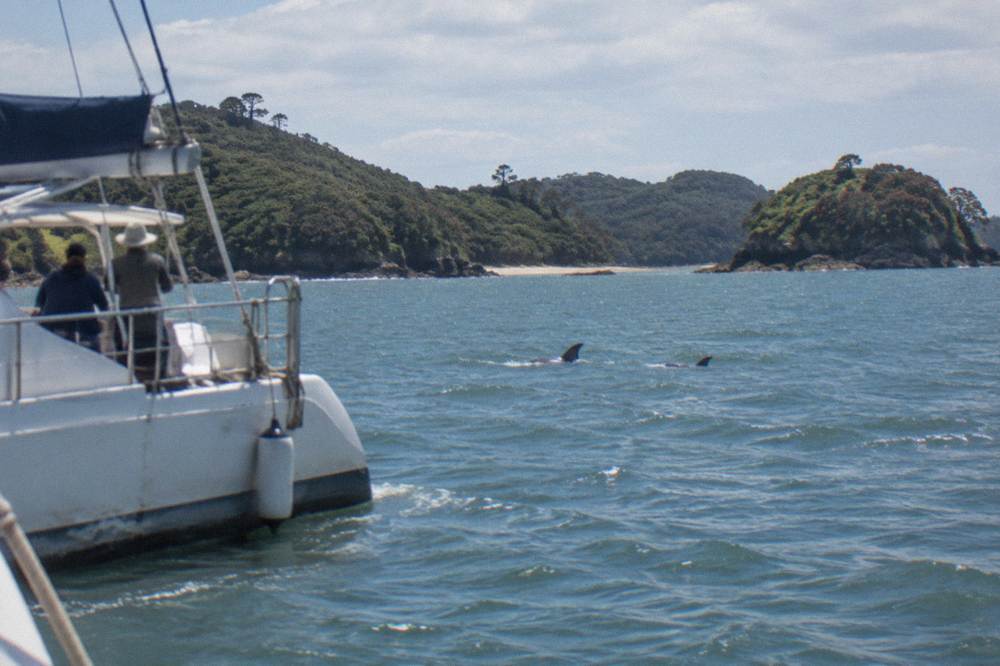
Swimming with dolphins stopped in the Bay of Islands because the local bottlenose population collapsed and the law changed to protect it. Commercial permit conditions prohibited swim encounters from 1 July 2019, and the Te Pewhairangi Marine Mammal Sanctuary, in effect from 15 December 2021, closed the water around every marine mammal to people within 300 m. The rule is absolute, it applies to everyone, and no tour operator can offer a swim inside the sanctuary. Dolphins are still part of the Bay of Islands experience, but from the deck of a cruise boat, not the water.
The story behind the ban is a research story as much as a legal one. Bottlenose dolphins in the Bay of Islands were photographed and catalogued across three decades of surveys, and the trend those surveys recorded was steep. A population estimated at 244 individuals in the summer of 1997 fell to a low of 16 in the summer of 2019. The most recent estimate, from autumn 2024, sits at 40 individuals, with a statistical range of 27 to 58. Those figures come from a NIWA and Far Out Ocean Research Collective report prepared for the Department of Conservation, and they are the numbers that reshaped tourism in the bay.
Against that backdrop, regulators acted twice. First came the 2019 permit conditions: swimming with bottlenose dolphins was prohibited for commercial operators, viewing was restricted, and interaction time was cut to 20 minutes per trip under those conditions. Then came the sanctuary itself, gazetted in November 2021 and in effect a month later, which extended protection from permitted tour boats to every person and every vessel on the water.
For travellers, the practical outcome is a cleaner line than most wildlife rules manage. There is no grey zone, no licensed swim operator, no seasonal exception. The Bay of Islands dolphin cruise you book from Paihia or Russell is a viewing trip, full stop, and the operators describe it that way.
When Did Swimming With Dolphins In The Bay Of Islands Stop?
Swimming with dolphins in the Bay of Islands ended for commercial tours on 1 July 2019, when new Department of Conservation permit conditions prohibited swim encounters with bottlenose dolphins. The Te Pewhairangi Marine Mammal Sanctuary then extended the prohibition to everyone from 15 December 2021. Since the sanctuary took effect, no one may enter the water within 300 m of any marine mammal in the bay.
The 2019 conditions did more than end the swims. They closed Tapeka Point and Roberton Island to commercial permit holders, restricted bottlenose viewing to either a morning or an afternoon session, and cut total interaction time to 20 minutes per trip. Permits were granted on three year terms, and a moratorium on new permits had already been in place since 2009. At that point four permit holders operated out of the Bay of Islands, with one more from Tutukaka. Those conditions were the first real signal that the swim era was closing.
The sanctuary finished the job. Gazetted on 17 November 2021 under the Marine Mammals Protection Act 1978 and in effect from 15 December 2021, Te Pewhairangi covers the bay with a uniform 300 m rule for all marine mammals: dolphins, whales and seals alike. The Department of Conservation's guidance is explicit that the sanctuary rule is specific to this bay and takes priority over the national marine mammal regulations, which is why advice about swims elsewhere in the country does not carry over here.
One further change matters to anyone reading older coverage. Two low speed zones that once covered about 7 percent of the sanctuary were removed from 4 July 2026 after a public consultation in which 87 percent of submitters supported removal. Some articles still describe those zones as current. They are not, and they never governed the swim ban anyway; the 300 m rules carry that weight on their own.
A reader planning a trip around older information can be forgiven the confusion. The swim tours have ended, and operators across the Bay of Islands have rebuilt their products around watching rather than getting in the water.
What Are The Rules In The Te Pewhairangi Marine Mammal Sanctuary?
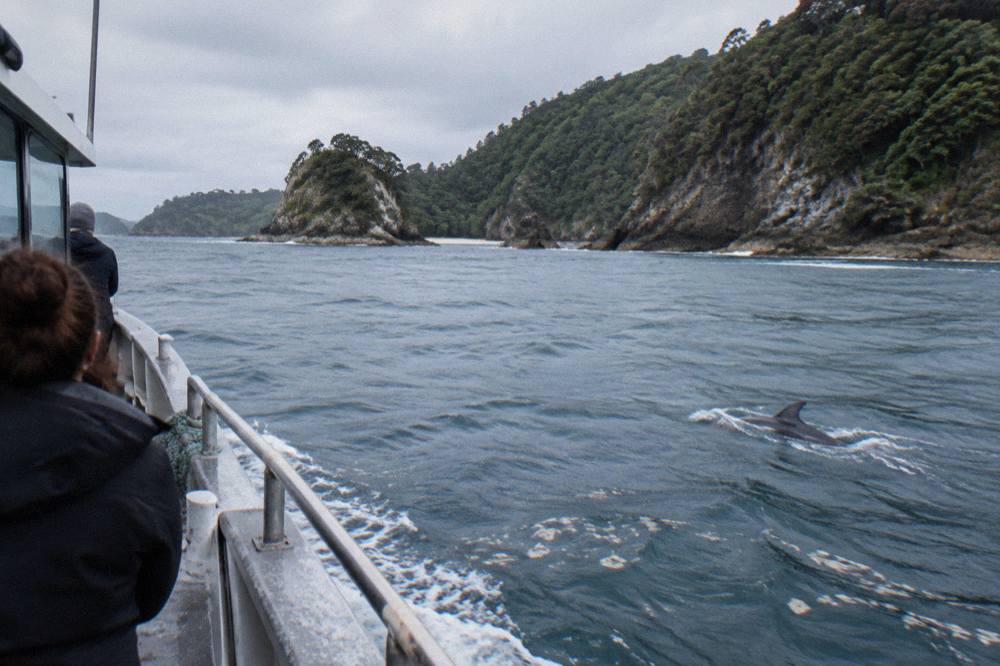
Inside the Te Pewhairangi Marine Mammal Sanctuary, no person may remain in the water within 300 m of any marine mammal, and vessels must keep 300 m away, stopping if a marine mammal comes closer and staying stopped until it moves beyond 300 m. The rules come from the Marine Mammals Protection Act 1978 and are enforced with infringement fees of $400, $600 or $800, with prosecution carrying up to two years in prison or a fine up to $100,000. The Department of Conservation publishes the details on its sanctuary page.
The vessel side of the rule surprises people who have boated elsewhere. It is not a slow down instruction. A boat that finds itself within 300 m of a dolphin, whale or seal must stop and wait; DOC research suggests marine mammals tend to be 300 m away again within a few minutes, so the stop is usually brief. Commercial skippers also follow the national approach rules that sit alongside the sanctuary: no more than three vessels within 300 m of any one animal, approach from behind and to the side, no circling a group, and no more than 10 knots when leaving.
The table below sets out what the sanctuary means in practice for the two groups it covers.
| Who | What the sanctuary requires | What happens if breached |
|---|---|---|
| Swimmers, snorkellers, divers, freedivers | Stay out of the water within 300 m of any dolphin, whale or seal | Infringement fee of $400, $600 or $800; prosecution up to 2 years prison or a $100,000 fine |
| Vessel operators, including kayaks | Keep 300 m from all marine mammals; stop if one is closer and stay stopped until it is beyond 300 m | Same infringement and prosecution range; commercial operators also answer to DOC permit conditions |
Two clarifications come up constantly. First, the sanctuary applies to all marine mammals, not only dolphins: jumping in near a fur seal is the same offence as jumping in near a bottlenose. Second, the rule is about distance from the animal, not about permits or tour membership. A private swimmer, a kayaker and a cruise passenger are all bound by it equally.
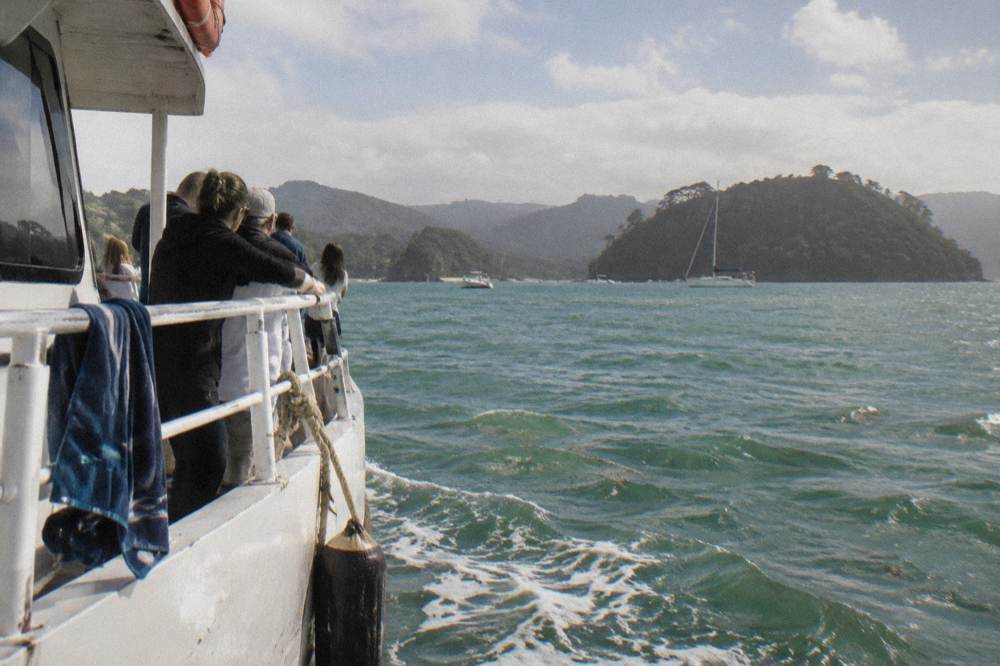
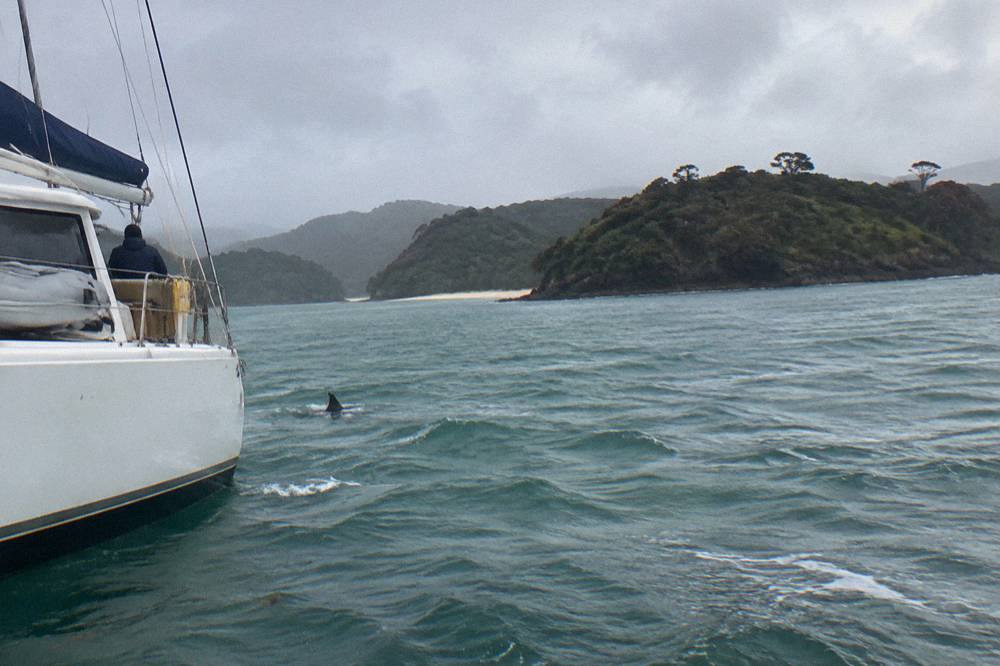
For cruise passengers the rules translate into a different kind of experience, and a good one. When a pod is near, the boat holds position and the dolphins come into view from the deck. The bottlenose dolphin page from DOC notes the North Island population these animals belong to numbers about 450 individuals from Doubtless Bay to Tauranga, with 26 individual dolphins recorded visiting the Bay of Islands area from 2020 data. Watching a group of them from a stationary vessel, with crew commentary and time to actually look, is what the modern cruise sells.
Why Did Dolphin Numbers Decline In The Bay Of Islands?
Local bottlenose abundance in the Bay of Islands fell from an estimated 244 individuals in the summer of 1997 to 16 in the summer of 2019, according to a NIWA report for the Department of Conservation, with the latest estimate at 40 individuals in autumn 2024. The same research programme photo-identified 540 unique individuals across 1,605 daily surveys between 1994 and 2024, recorded calf mortality high compared with other areas, and concluded that the decline merits management intervention.
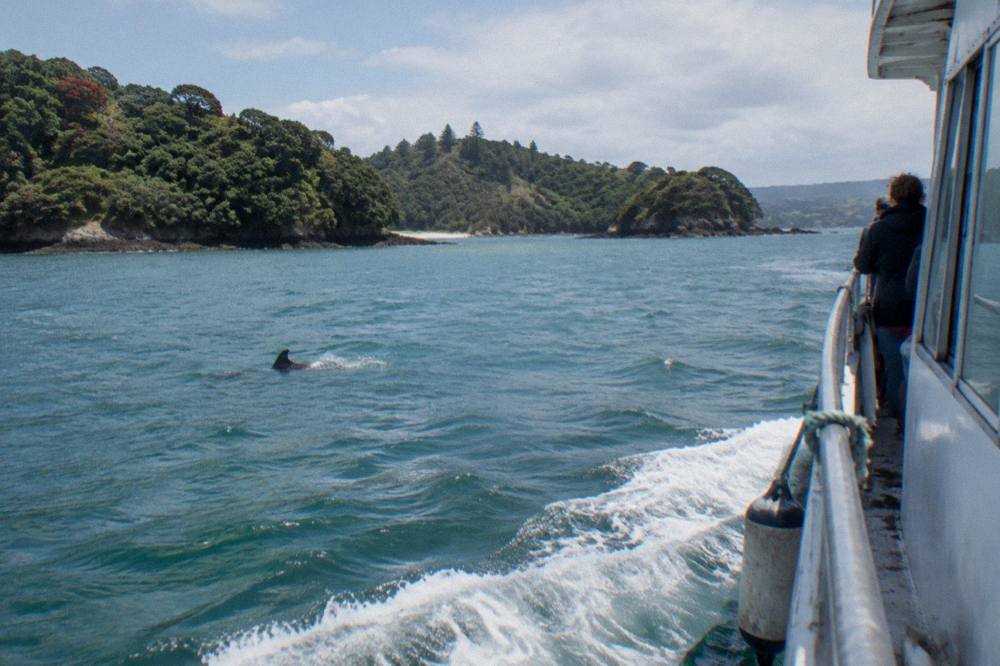
The numbers deserve a closer look, because they explain the severity of the rules.
| Survey period | Estimated bottlenose dolphins in the Bay of Islands | Source |
|---|---|---|
| Summer 1997 | 244 (range 116 to 515) | NIWA / Far Out Ocean Research Collective report for DOC |
| Summer 2019 | 16, the recorded low | Same report |
| Autumn 2024 | 40 (range 27 to 58) | Same report |
What sits behind the decline is harder to pin to a single cause, and the honest answer is that the research describes pressure rather than proof. DOC guidance notes that bottlenose dolphins in this population spend 86 percent of daylight hours surrounded by vessels or humans, and identifies tourism effects as the main likely threat. Calf mortality in the bay runs high compared with other areas. The report's own compliance observations add a nuance: in a 20 day sample, vessels generally complied poorly with the sanctuary vessel rules, while every vessel observed complied with the no-swimming rule.
NIWA's modelling also found that bottlenose occurrence in the bay is lower in the winter months. That is a model result about the population, not a promise about any particular cruise, and no operator here claims a sighting rate. It is simply part of the picture researchers have assembled: a small, pressured population that the sanctuary now buffers from the water itself.
One thing the decline story does not do is end the wildlife experience. The bay still hosts common dolphins, which one operator's wildlife guide describes as abundant locally, along with occasional orca, Bryde's whales, pilot whales, fur seals, penguins and seabirds. The bottlenose group is the sensitive one, and the rules are calibrated to it. Other species appear in the same waters under the same 300 m protections, and a watching cruise is the lawful way to meet any of them.
Can You Still See Dolphins On A Cruise From Paihia Or Russell?
Yes, watching cruises still run from Paihia and Russell, but none of them offers a swim with dolphins or promises a sighting.
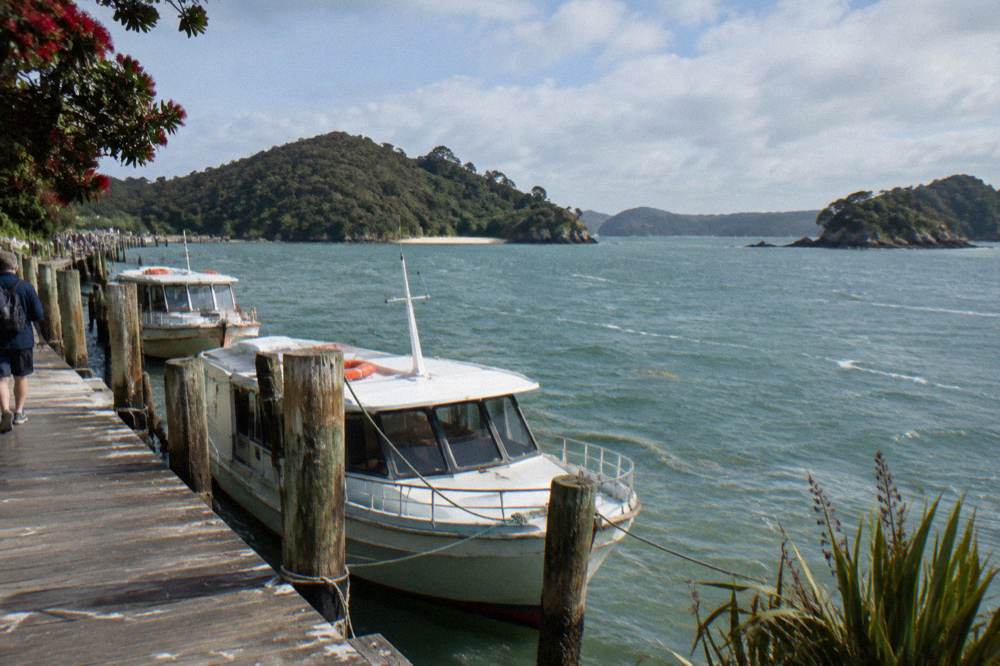
The Dolphin Eco Cruise is the clearest example of what replaced the swim. Explore Group describes a marine wildlife trip centred on viewing: dolphins, whales, seals and birdlife, watched from a cruise boat with a group cap of 100, departing Paihia or Russell, with toilets on board and free cancellation up to 24 hours before the start. As a newer tour it has no reviews yet, too few for any star claim. The operator mentions dolphins in its description, which not every cruise here does; of the 22 tours on this site, 15 say nothing about dolphins beyond a general marine wildlife lookout.
The itineraries also explain where a swim legitimately fits. The Explore Group Hole in the Rock, Dolphins and Island Cruise devotes about 1.5 hours of its roughly 4.5 hours to a stop at Urupukapuka Island on the Otehei Bay side, where swimming, exploring and sunbathing are island activities. The Island Getaway cruise with two island stops lists snorkelling equipment among its inclusions and stops at remote islands, and its sister 4.5-hour day cruise, also from $101 and rated 4.8 across 300 reviews, does the same with a 49 guest cap. These are beach and bay swims at islands, entirely separate from anything involving a marine mammal. Explore how a Dolphin Eco Cruise day actually runs or Check availability.
Other operators round out the watching options. Carino Wildlife Cruises runs an island and wildlife day cruise of about 6 hours from Paihia, from $131.87, rated 4.9 across 52 reviews with lunch included and a group cap of 20. The R. Tucker Thompson tall ship day sail, 5 hours 30 minutes from Russell from $117.53, rated 4.9 across 387 reviews, carries a barbecue lunch, and the operator mentions dolphins in its description. The Explore Group Day in the Bay cream trip cruise, about 8.5 hours from $127, states a dolphin viewing and marine mammal guarantee, the one tour here that does. What none of these carries is anything in the water near a dolphin.
For readers weighing the honest limits: sightings are never promised on these trips, and the Bayscapes Charters sailing cruise says outright that wildlife sightings are common but cannot be guaranteed. That is the right frame for any wild animal. The cruises that name dolphins are selling the search, the commentary and the bay itself. This site, Bay Of Islands Dolphin Cruises, covers that watching market, because that is the market that exists.
Can You Swim At All On A Bay Of Islands Cruise?
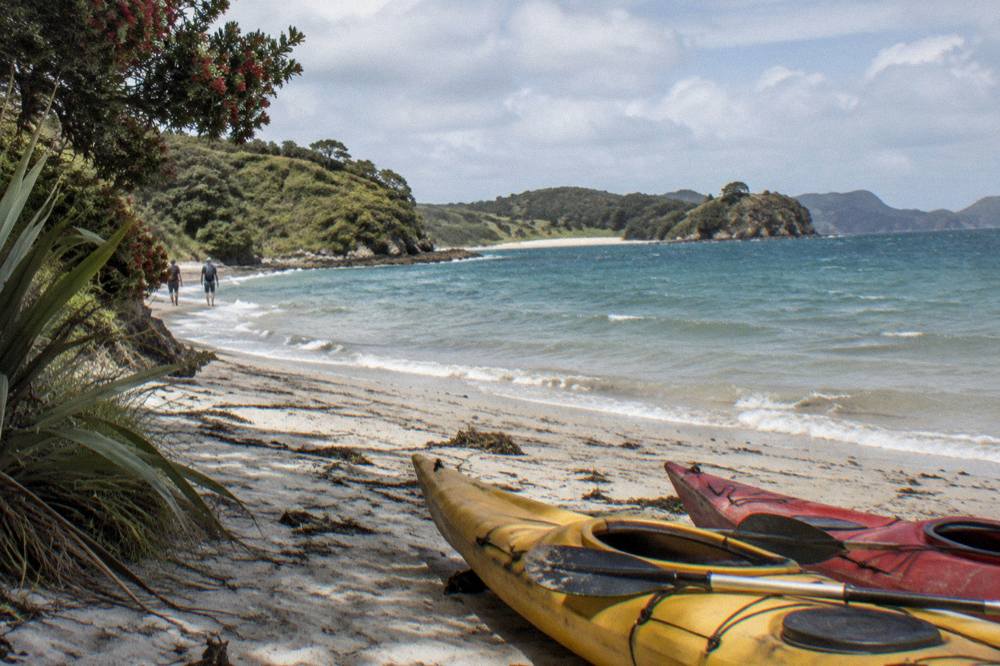
Yes, at island stops only, and only where a tour states them. The Explore Group Hole in the Rock, Dolphins and Island Cruise includes about 1.5 hours at Urupukapuka Island, and several Island Getaway and sailing tours include island stopovers with snorkelling gear. A swim at Otehei Bay or another island beach is an island activity, legal because it is not a marine mammal encounter. It never involves dolphins, and crews hold it to the same 300 m rule as everything else.
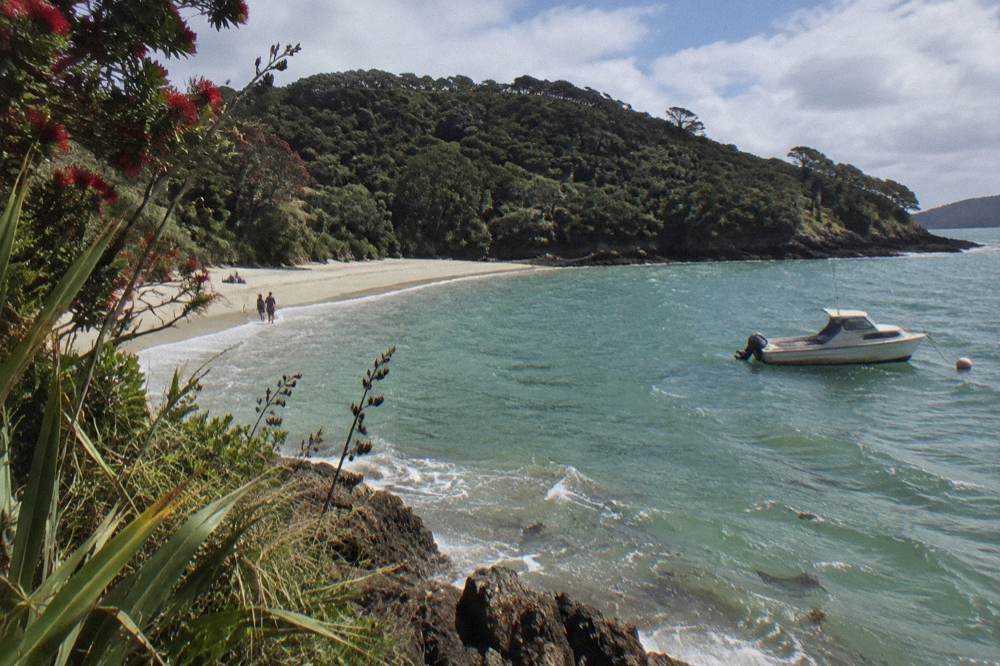
The distinction matters enough to spell out. Island beaches in the bay sit inside the sanctuary too, so the rule follows you ashore and into the water: if a dolphin, whale or seal comes within 300 m of the beach, swimmers come out. In normal conditions an Otehei Bay swim is simply a beach swim, one of the reasons the stop is popular. The Department of Conservation's Urupukapuka Island walk page describes the island's full walking circuit at five hours, joined most easily from Otehei Bay, so a cruise stop can pair a swim with a short walk past archaeological sites on the largest island in the bay.
Which tours carry the gear is worth checking before you book, because it varies. The Island Getaway Hole in the Rock cruise with two island stops lists snorkelling equipment, as do its 4.5-hour day cruise and island tour, the Carino Wildlife Cruises day cruise, the Barefoot Sailing Adventures Island Hopper catamaran sail, the Gungha II day sailing tour, the Phantom Sailing yacht trip, the Bayscapes Charters catamaran cruise, the Vigilant Yacht Charters full-day sail and both Bay of Islands Kayaking tours. The Explore Group cruises do not list gear, and food arrangements differ tour by tour, with lunch included on the Discover the Bay cruise, the Carino cruise, the R. Tucker Thompson day sail and most of the sailing trips. If a swim at the island stop is part of your plan, confirm what the tour provides on its booking page rather than assuming.
Readers deciding between a dedicated swimming page and this one may find the companion guide useful: whether you can swim with dolphins on a Bay of Islands cruise covers the same question from a planning angle, and whether it is safe to swim with wild dolphins in the ocean looks at the national picture beyond this sanctuary.
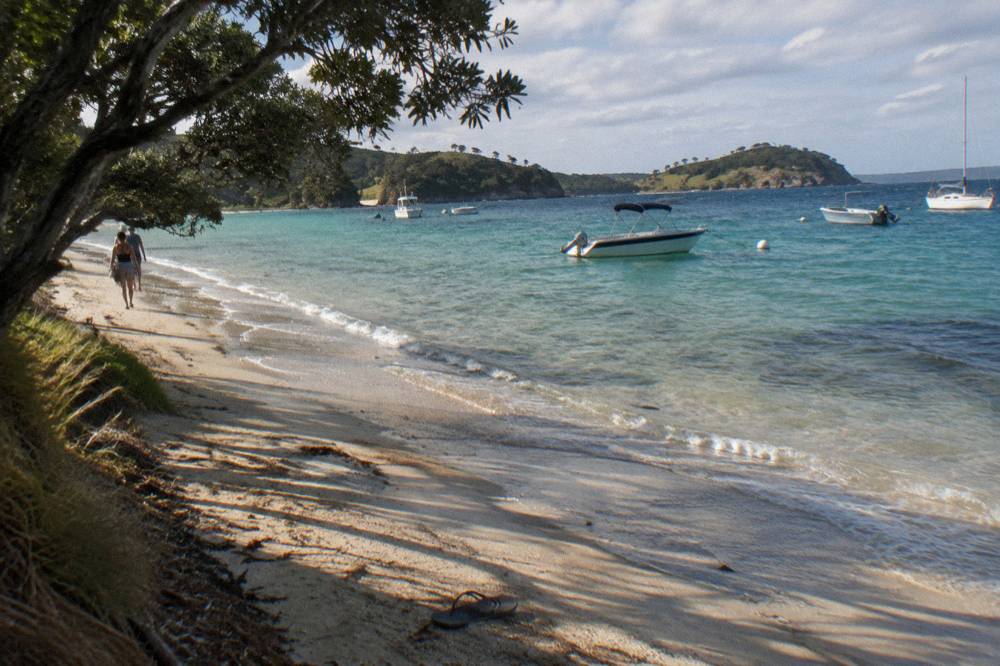
The kayaking tours deserve a mention here, because they are the closest thing to being on the water rather than above it. The Bay of Islands Kayaking afternoon island tour, from $132, includes 2.5 to 3 hours of guided paddling plus snorkelling equipment and free time on Urupukapuka Island, and its full-day sea cave adventure, from $166 with lunch, stretches to about 10 hours. Both are island and coastline trips. National rules count kayaks as vessels around marine mammals, so paddlers hold the same distances a cruise boat does.
What Happens If Someone Swims Near Dolphins In The Bay Of Islands?
It is an offence to remain in the water within 300 m of any marine mammal in the sanctuary, with infringement fees of $400, $600 or $800, and prosecution available with penalties up to two years in prison or a $100,000 fine. The rule has no species test, no age test and no permit exception for tour passengers. Enforcement sits with the Department of Conservation, and the penalties are published in the sanctuary guidance so that ignorance is a thin defence.
Most travellers will never face this, because the tours are built to prevent it. Skimmers of older tours are the risk group: someone who booked a "dolphin swim" title from an earlier era, or who assumes the national rules they read about for another region apply here. They do not. The sanctuary language is specific to Te Pewhairangi and takes priority over the national regulations, which is the exact point DOC's guidance makes when it explains why swims allowed elsewhere are banned in this bay.
There is a behavioural point worth making too. The NIWA compliance sample found vessels generally poor at following the 300 m stop rule, while every vessel observed followed the no-swimming rule. The swim ban, in other words, is the part of the framework that has stuck. Passengers can help the vessel rules stick by letting crew manage any encounter rather than pressing for a closer look, and by treating a sighting as a watched moment rather than a photo op to be chased.
For anyone still weighing whether a swim elsewhere in the country makes sense as an alternative, the honest comparison is on the page about swimming with dolphins in New Zealand and Bay of Islands dolphin cruises, which sets out the national rules and shows why the Bay of Islands sanctuary takes precedence over them.
So What Should You Book From Paihia Or Russell Now?
Book a watching cruise. The trips that fit most itineraries are the Explore Group Dolphin Eco Cruise at 5 hours 30 minutes from $97.47, the Explore Group Hole in the Rock, Dolphins and Island Cruise at about 4.5 hours from $90, and the Island Getaway Hole in the Rock cruise with two island stops at about 4.5 hours from $101. All three depart Paihia or Russell, and all three carry free cancellation up to 24 hours before the start. Prices are per person.
The choice between them comes down to time and texture. The Dolphin Eco Cruise is the longest of these three, built around viewing with an island stop in the mix. The Explore Group Hole in the Rock, Dolphins and Island Cruise pairs the wildlife lookout with a cruise to the Hole in the Rock at Motukokako and an Urupukapuka Island stop, and is rated 4.6 across 902 reviews. The Island Getaway cruise with two island stops is the most reviewed tour on this site, 4.8 across 1,217 reviews, and suits travellers who want islands, gear and a general wildlife lookout rather than a dolphin-focused narrative.
Here is how the three compare side by side.
| Tour | Duration | From, per person | Rating and reviews | Departs |
|---|---|---|---|---|
| Explore Group Dolphin Eco Cruise | 5 hours 30 minutes | $97.47 | New tour, no reviews yet | Paihia and Russell |
| Explore Group Hole in the Rock, Dolphins and Island Cruise | About 4.5 hours | $90 | 4.6 across 902 reviews | Paihia and Russell |
| Island Getaway Hole in the Rock cruise with two island stops | About 4.5 hours | $101 | 4.8 across 1,217 reviews | Paihia and Russell |
A broader budget frame helps too. One-day per-person tours across this site run from $63.07 for the R. Tucker Thompson tall ship sundowner sail to $166 for the full-day kayak adventure, with a median of $111.80. Auckland day trips sit on their own scale at $255.42 to $263.16, and the Rock Adventure overnight cruise, 22 hours on board, at $228.19. Watching a dolphin from a deck, in other words, is not a premium add-on; it is the standard product of the bay, available across a wide spread of prices.
Common Questions About Swimming With Dolphins In The Bay Of Islands
Why Can't You Swim With Dolphins Anymore?
Swimming with dolphins is not permitted in the Bay of Islands. Commercial swim encounters ended under 2019 permit conditions, and the Te Pewhairangi Marine Mammal Sanctuary, in effect from 15 December 2021, keeps everyone out of the water within 300 m of any dolphin, whale or seal.
Can You Swim With Dolphins In The Bay Of Islands On A Licensed Tour?
No. No tour in the bay offers a dolphin swim, licensed or otherwise. All dolphin experiences here are watching trips from a vessel, and island beach swims happen only at stops and only when no marine mammal is within 300 m.
Is Swimming With Dolphins Legal Anywhere In New Zealand?
National rules allow swim encounters with some species in some places, but the Bay of Islands sanctuary overrides that here. The sanctuary rule is specific to Te Pewhairangi and takes priority, so no swim with any marine mammal is lawful in this bay.
What Is The Fine For Swimming Near Dolphins In The Bay Of Islands?
Infringement fees run $400, $600 or $800, and prosecution can carry up to two years in prison or a fine up to $100,000. The rule covers swimming, snorkelling, diving and freediving within 300 m of any marine mammal.
Do Bay Of Islands Cruises Still See Dolphins?
Yes, watching cruises run from Paihia and Russell, and seven of the tours covered on this site name dolphins in their own descriptions. Sightings are never promised on these trips; one tour, the Explore Group Day in the Bay cream trip cruise, states a dolphin viewing and marine mammal guarantee.
Can You Swim On A Bay Of Islands Cruise At All?
Yes, at island stops where the tour states them. The Explore Group Hole in the Rock, Dolphins and Island Cruise includes about 1.5 hours at Urupukapuka Island, and several Island Getaway and sailing tours include island stopovers with snorkelling equipment. These are island activities, never dolphin encounters.