Bottlenose And Common Dolphins On A Bay Of Islands Cruise
Two dolphin species steal the show on a Bay of Islands cruise: a small, closely studied population of bottlenose dolphins and abundant common dolphins. Here is what the research actually says, and which cruises from Paihia and Russell mention dolphins in their own descriptions.
Short answer
Two dolphin species appear in the Bay of Islands: bottlenose dolphins, a locally declining population estimated at 40 in autumn 2024, and common dolphins, described by operators as abundant with no precise estimate. Swimming with either is not permitted. Cruises from Paihia and Russell are watching trips from the vessel.
What Dolphins Live In The Bay Of Islands?
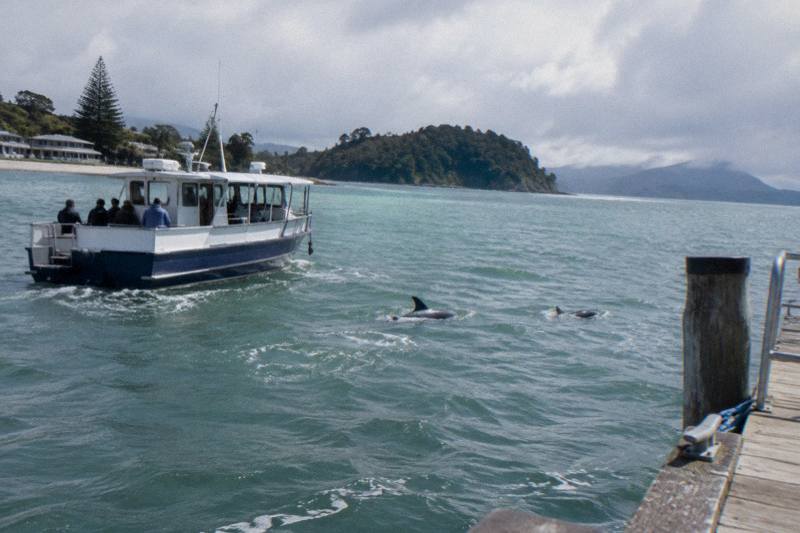
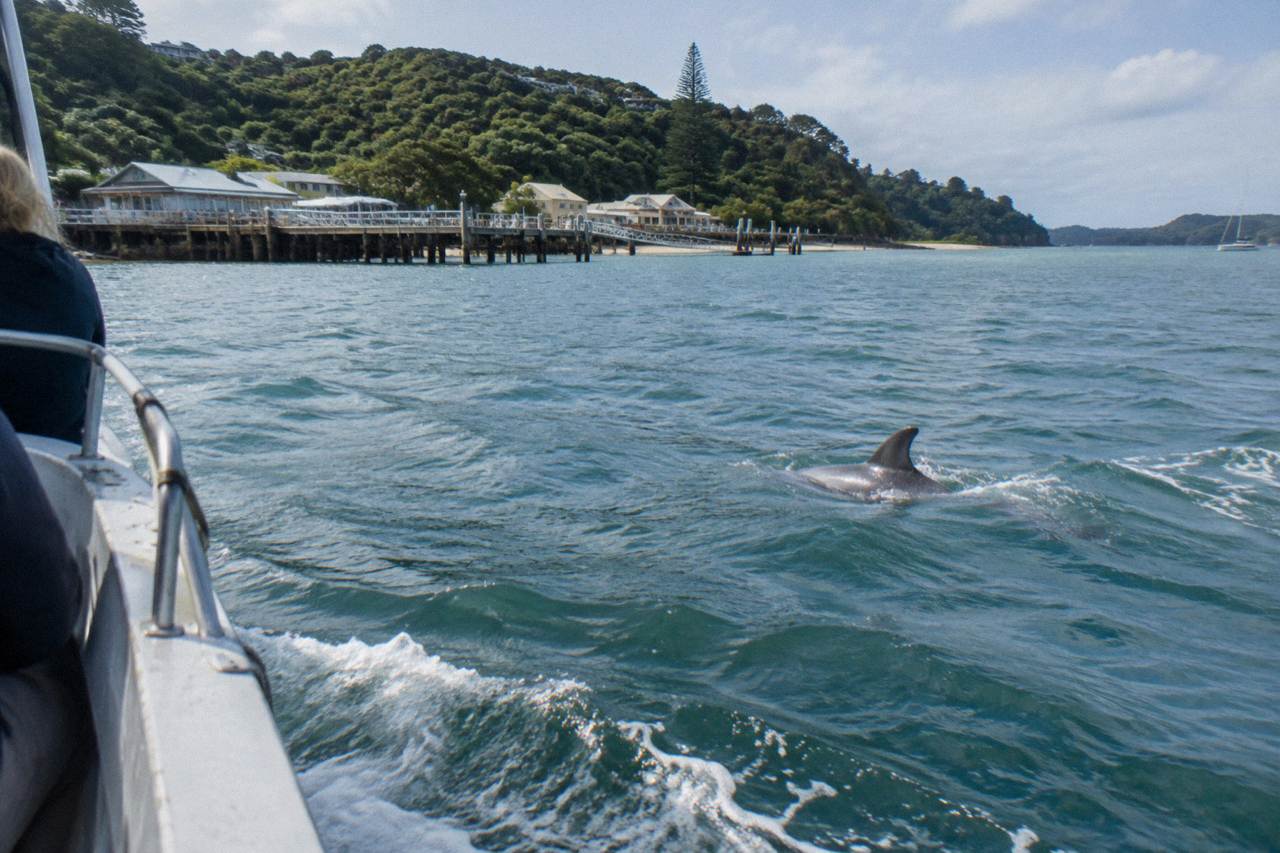
Two dolphin species are regularly described in the Bay of Islands: bottlenose dolphins and common dolphins. Operators' wildlife guides say bottlenose and common dolphins are the ones most likely encountered, with orcas appearing occasionally. All dolphin cruises here are watching trips from the vessel, because swimming with dolphins is not permitted in these waters.
The Bay of Islands sits inside the Te Pewhairangi Marine Mammal Sanctuary, a protected area gazetted in November 2021 under the Marine Mammals Protection Act 1978. That status shapes every dolphin cruise departure from Paihia or Russell. Bottlenose dolphins are the bay's resident celebrities, a population that NIWA and DOC have photo-identified across three decades of surveys, and the one whose numbers tell a cautionary story. Common dolphins are the energetic supporting act, which an operator wildlife guide describes as abundant.
The operator wildlife guide for the local cruise fleet describes the realistic picture: bottlenose dolphins and common dolphins are the most likely species, with orcas seen occasionally. Beyond dolphins, the same guide describes Bryde's whales, long-finned pilot whales, fur seals, penguins bobbing in the water, and seabirds including gannets, gulls, petrels and muttonbirds. No cruise promises any particular animal on any particular day, and only one listing states a guarantee at all. What a cruise does promise is the water, the islands, and a crew who knows where the animals have been.
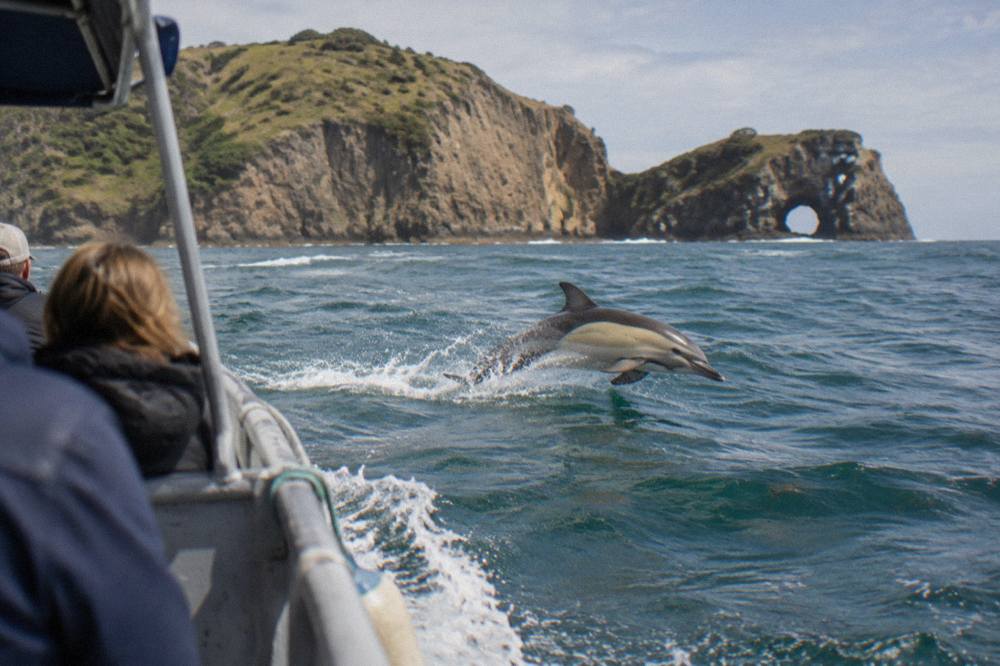
Telling the two species apart from a deck is easier than most visitors expect. Bottlenose dolphins are larger and stockier, with a short blunt rostrum and a grey back that fades to a pale belly. Common dolphins are slimmer and quicker, with an hourglass pattern of yellow and grey along their flanks, and they are the ones that leap in numbers when a pod is feeding. A crew member will usually call out which species is in front of you, and on a day when both appear, the difference in energy is unmistakable.
For readers deciding between trip types, the species question matters less than the format question. A dedicated dolphin-watching trip such as the Explore Group Dolphin Eco Cruise mentions dolphins, whales, seals and birdlife in its own description, where a scenic cruise may name no animals at all. The wider choice between cruise styles is covered in the Bay of Islands dolphin cruises compared guide, and the dolphin watching in the Bay of Islands page goes deeper on the watching experience itself.
| Species | Status in the bay | Source |
|---|---|---|
| Bottlenose dolphin | Resident population, closely monitored, locally declining | DOC and NIWA research |
| Common dolphin | Described as abundant, no precise estimate | Operator wildlife guide |
| Orca | Occasional sightings described | Operator wildlife guide |
| Bryde's whale, pilot whale | Occasional, described in the wildlife guide | Operator wildlife guide |
| Fur seal, penguin, gannet | Regularly described around the islands | Operator wildlife guide |
How Many Bottlenose Dolphins Are In The Bay Of Islands?
The NIWA estimate for autumn 2024 is 40 bottlenose dolphins in the Bay of Islands, with a 95 percent range of 27 to 58. That is down sharply from 244 estimated in summer 1997, and up from a low of 16 in summer 2019. DOC separately records 26 individual dolphins visiting the bay area in its 2020 data.
Those figures come from a March 2025 NIWA and Far Out Ocean Research Collective report for DOC, built on 1,605 daily surveys between 1994 and 2024 and 540 unique photo-identified individuals over that period. The long arc of the data is the story: a population that once numbered in the hundreds in the late 1990s fell to a startling low of 16 by summer 2019, and the 2024 estimate of 40 sits well below historical levels. The report also found calf mortality in this population is high compared with other areas, and concludes the decline merits management intervention. DOC's bottlenose dolphin species page adds the wider context: about 450 individuals make up the North Island coastal population from Doubtless Bay to Tauranga, and DOC identifies tourism effects as a likely main threat. Fieldwork between March and June 2024 photo-identified 24 individuals in the bay, a snapshot that shows how few animals carry the entire local story.
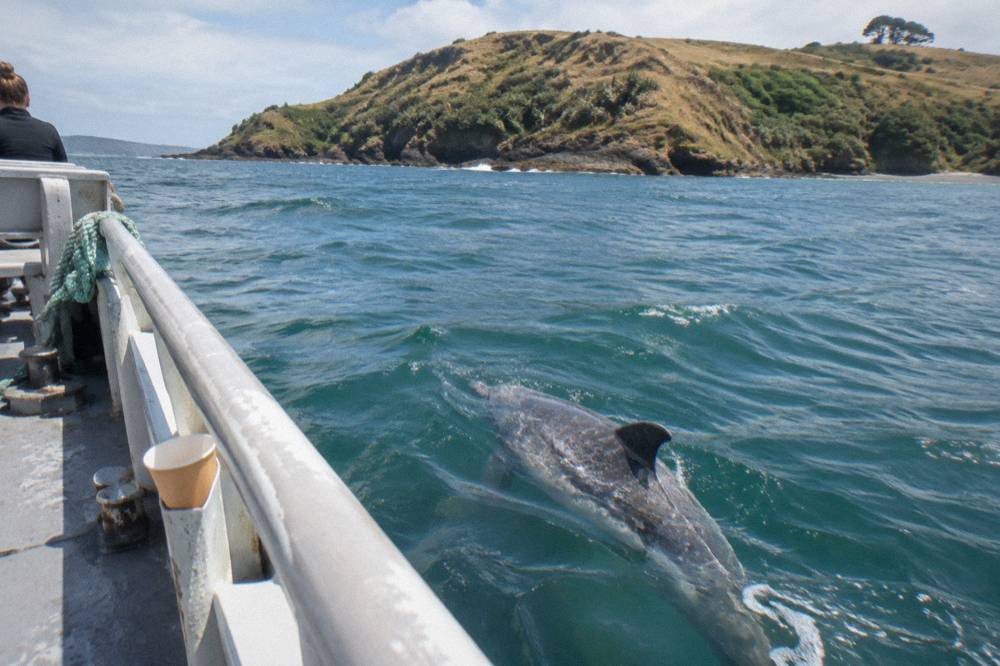
One DOC figure deserves plain language: bottlenose dolphins in this bay spend 86 percent of their daylight hours surrounded by vessels or humans. That single statistic explains why the sanctuary exists, why the swim ban applies to everyone, and why vessels must stop and wait when a dolphin comes within 300 m rather than following it. NIWA's 20-day compliance sample found vessels generally poor at following the vessel rules, though every vessel observed complied with the no-swimming rule. NIWA's modelling also found bottlenose occurrence in the bay is lower in the winter months; that is a modelling result about the population, not a promise about any particular cruise.
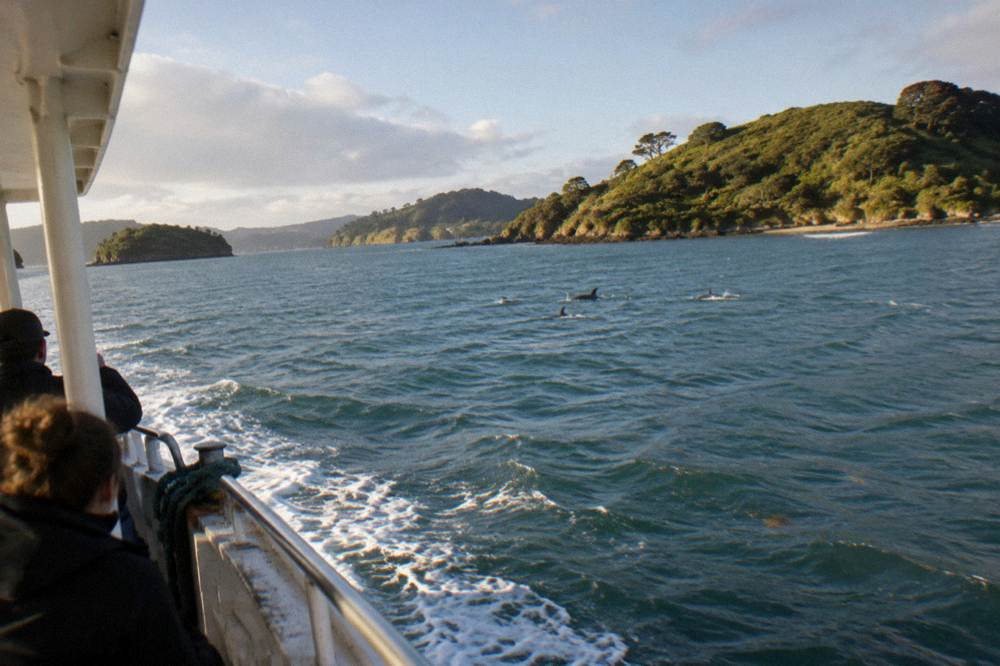
Given those numbers, it is fair to ask what a dolphin cruise actually contributes. The cruises covered here are watching trips run by licensed operators under DOC rules, and several actively name dolphins in what they offer. If knowing the operator describes dolphin encounters matters to you, these three are the natural starting points.
Another dolphin-naming option is the Explore Group Dolphin Eco Cruise, a 5 hours 30 minutes voyage from $97.47 per person departing Paihia or Russell, with a group cap of 100 guests. It is a newer tour without reviews yet, so there is no rating to report, but the operator's description names dolphins, whales, seals and birdlife, and the trip includes a 1.5-hour stop at Otehei Bay.
What Are Common Dolphins Like On A Bay Of Islands Cruise?
Common dolphins are described as abundant in the Bay of Islands. The operator wildlife guide calls them abundant in the Bay of Islands while noting no precise population estimate exists. No tour promises them on any given day.
The operator's wildlife guide describes them as abundant in the bay, and explicitly notes that a precise population estimate does not exist. That honesty matters: no scientist can tell you how many common dolphins use these waters, so no cruise should be expected to. What the guide does establish is that common dolphins are abundant, which is not the same as a promise on any given day.
Practically, a cruise from Paihia or Russell that heads out toward the Hole in the Rock passes through the water where common dolphins feed and travel. The Explore Group Hole in the Rock, Dolphins and Island Cruise runs about 4.5 hours from $90 per person, is rated 4.6 across 902 reviews, and mentions dolphins in the operator's description while visiting Motukokako and stopping about 1.5 hours at Urupukapuka Island on the Otehei Bay side. The Island Getaway Hole in the Rock cruise with two island stops, also about 4.5 hours from $101 and rated 4.8 across 1,217 reviews, keeps its wildlife language general: snorkel gear is listed, two island stopovers are included, and no particular species is promised.
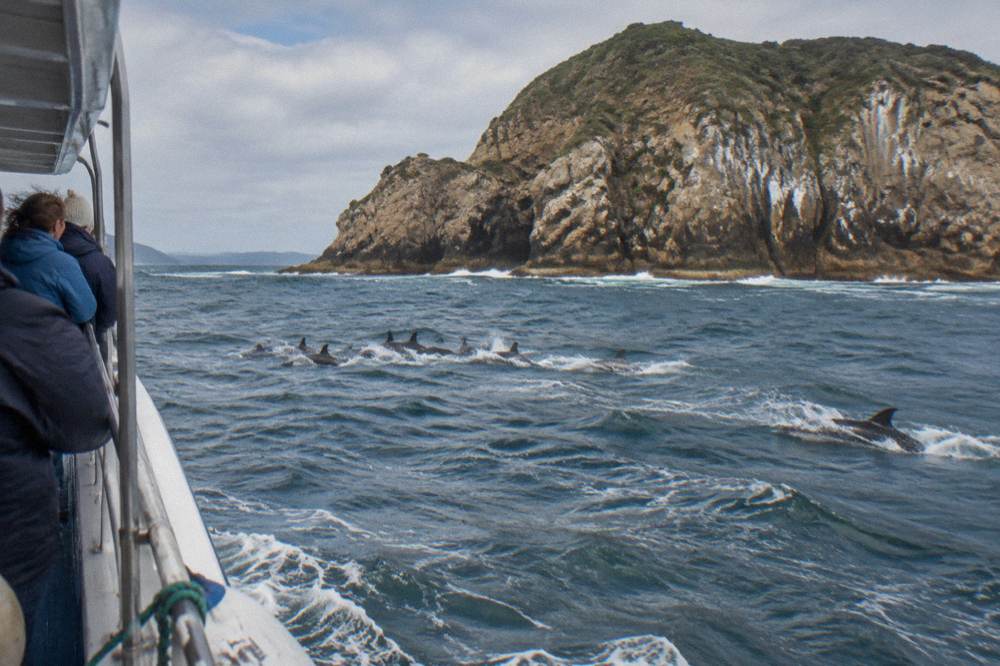
That two-island Island Getaway cruise is worth a closer look if island time matters as much as the dolphins do.
For readers weighing a species-focused trip against a wider marine day out, the Carino Wildlife Cruises island and wildlife day cruise from $131.87 per person offers another angle: about 6 hours, a maximum of 20 guests, lunch and snorkel gear included. It is rated 4.9 across 52 reviews. Whichever format you lean toward, the species you meet is the same two, and the rules that protect them are identical on every boat.
Which Dolphin Cruises From Paihia And Russell Mention Dolphins?
Of the tours covered on this site, seven name dolphins in their own descriptions, including the Explore Group Dolphin Eco Cruise, the Hole in the Rock, Dolphins and Island Cruise, and the Explore Group Discover the Bay cruise with island lunch. The rest do not name dolphins and promise no species.
That split is worth knowing before you book, because a cruise that names dolphins mentions them in its description, while one that only says wildlife spotting leaves the possibilities open. The dolphin-naming trips from Paihia and Russell include the Explore Group Hole in the Rock, Dolphins and Island Cruise, about 4.5 hours from $90, rated 4.6 across 902 reviews; the Explore Group Discover the Bay cruise with island lunch, 4.5 hours from $121, rated 4.7 across 302 reviews, which includes an island lunch and a 1.5-hour stop at Otehei Bay; and the R. Tucker Thompson tall ship day sail with barbecue lunch from Russell, 5 hours 30 minutes from $117.53, rated 4.9 across 387 reviews, where the operator mentions dolphins alongside the sailing itself.
| Cruise | Duration | From price | Rating and reviews | Dolphins named |
|---|---|---|---|---|
| Explore Group Hole in the Rock, Dolphins and Island Cruise | About 4.5 hours | $90 | 4.6, 902 reviews | Yes |
| Explore Group Discover the Bay cruise with island lunch | 4.5 hours | $121 | 4.7, 302 reviews | Yes |
| Explore Group Dolphin Eco Cruise | 5 hours 30 minutes | $97.47 | No reviews yet | Yes |
| Island Getaway Hole in the Rock cruise, two island stops | About 4.5 hours | $101 | 4.8, 1,217 reviews | General wildlife only |
| Carino Wildlife Cruises island and wildlife day cruise | About 6 hours | $131.87 | 4.9, 52 reviews | Yes |
| R. Tucker Thompson tall ship day sail, barbecue lunch | 5 hours 30 minutes | $117.53 | 4.9, 387 reviews | Yes |
Only one tour on this site goes further than naming dolphins: the Explore Group Day in the Bay cream trip cruise, about 8.5 hours from $127 per person, rated 4.8 across 123 reviews, states a dolphin viewing and marine mammal guarantee in what it includes. No terms are published on the tour page itself, so treat that as a stated guarantee rather than a promise of a sighting. For most readers the choice comes down to duration, boat style and price, all compared in the which Hole in the Rock cruise to book guide and the Bay of Islands cruises compared roundup.
A shorter or cheaper day is also possible without losing the dolphin angle entirely. The Island Getaway three-hour Hole in the Rock cruise from $88.87 per person, rated 4.9 across 197 reviews from Paihia Wharf, caps groups at 49 guests, visits the Hole in the Rock and Cape Brett Lighthouse and stops at Roberton Island, keeping its wildlife language general throughout.
Can You Swim With The Dolphins On A Bay Of Islands Cruise?
No. Swimming with dolphins is not permitted in the Bay of Islands. The Te Pewhairangi Marine Mammal Sanctuary rule keeps everyone out of the water within 300 m of any dolphin, whale or seal, and this local rule takes priority over the national regulations. Cruises here are watching trips from the vessel, full stop.
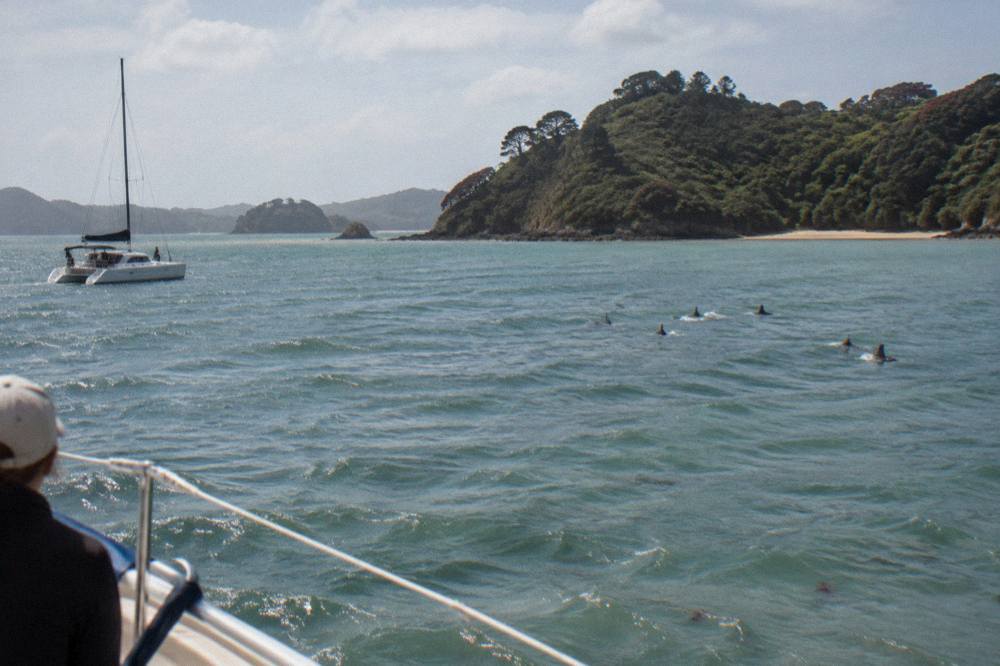
The Department of Conservation states it plainly on its sanctuary page: no one is allowed in the water within 300 m of a marine mammal in this sanctuary. That covers swimming, snorkelling, diving and freediving, with no exceptions for species, age or operator. The penalties are serious, with infringement fees of $400, $600 or $800 and prosecution available up to two years imprisonment or a fine of $100,000. The 2021 sanctuary formalised what the 2019 permit conditions had already imposed on commercial operators, when all swimming with bottlenose dolphins was prohibited outright; no source since shows any reversal, and every operator page today offers viewing from the vessel only.
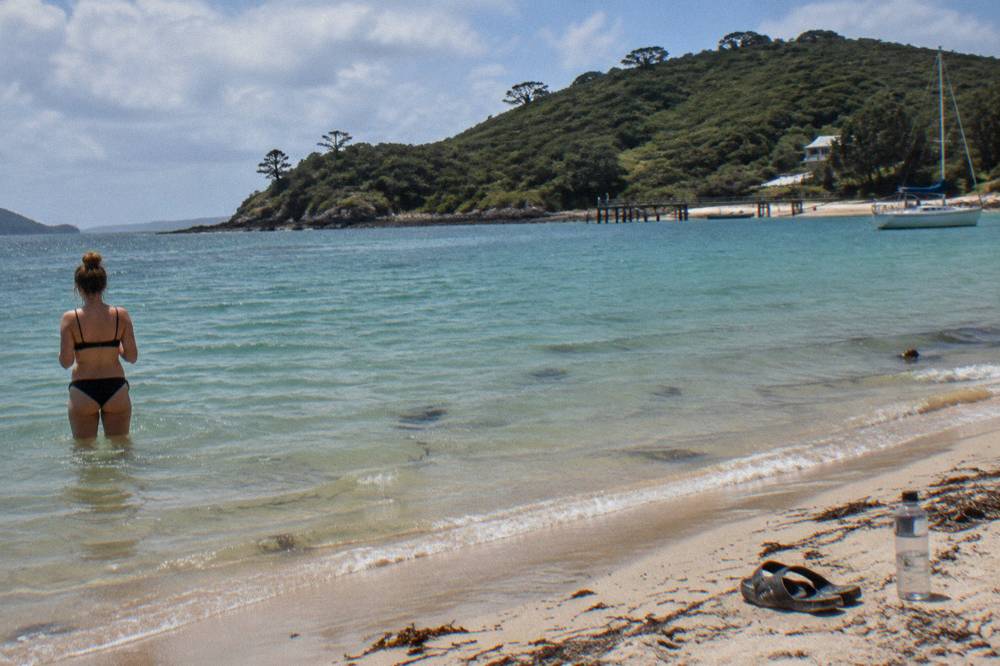
Swimming does happen on these tours, just never with the dolphins. Several cruises include an island stop where a beach swim is the point: the Explore Group Hole in the Rock, Dolphins and Island Cruise puts about 1.5 of its 4.5 hours onto Urupukapuka Island for a swim, a walk or sunbathing, and the kayak tours include snorkelling time off the island beaches. Those are island activities in water with no marine mammal nearby, and the crew keeps it that way.
What Rules Protect The Dolphins During A Cruise?
Vessels must keep 300 m from all marine mammals in the sanctuary, and if a dolphin comes closer than 300 m the boat must stop and stay stopped until the animal is more than 300 m away. National rules add no-wake approach from behind and to the side, and no more than three vessels within 300 m of any animal.
Those national Marine Mammals Protection Regulations also ban circling or cutting through a group, cap leaving speed at 10 knots within 300 m of a dolphin, require aircraft and drones to stay more than 150 m away horizontally, and set 20 m as the distance from seals ashore. Up to six kayaks rafted together count as a single vessel under the three-vessel limit, a detail that matters for the sea kayak tours around the eastern islands. The sanctuary overlays something stricter for boats: a full stop and wait, not a slowdown. DOC guidance notes research suggesting marine mammals tend to be 300 m away within a few minutes, which is why the rule is written as a pause rather than a retreat. Some operators state a DOC licence in their listings, and the sanctuary rules apply on top of all this.
For passengers, the practical translation is simple. When the boat stops and the engines fall quiet, the dolphins have come to you, and the crew is complying with the law. When a pod travels on, the boat waits, then resumes its route toward Cape Brett or the islands. Understanding this rhythm is part of enjoying the day: the dolphins decide the encounter, and a good crew lets them.
Where Else Do The Cruises Stop To See Wildlife?
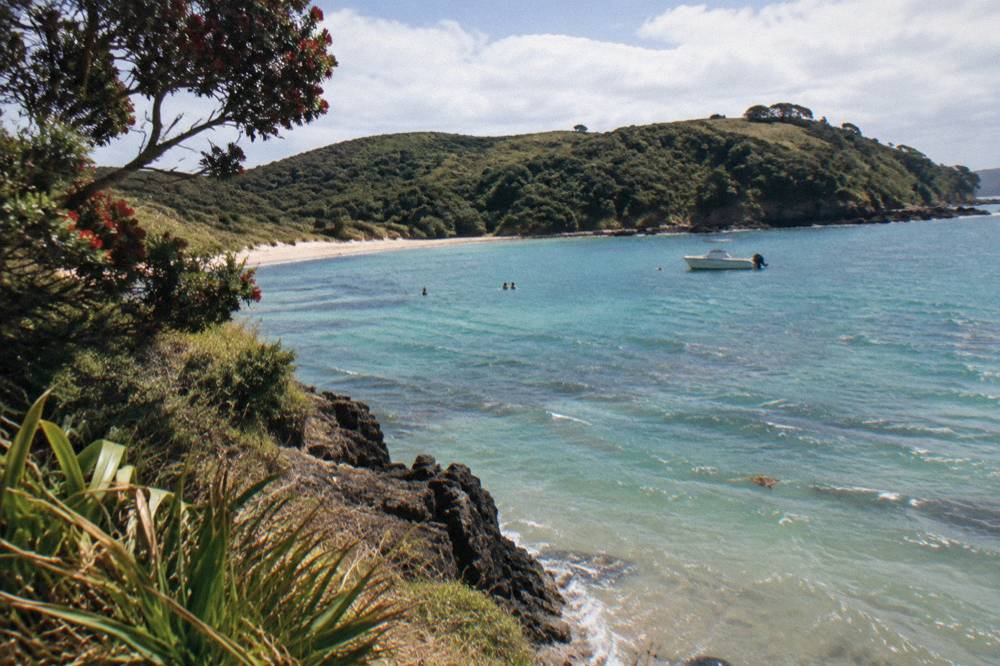
Most dolphin cruises pair the marine search with an island stop, usually at Urupukapuka Island, the bay's largest island at 208 hectares with at least 66 recorded archaeological sites. The full island walk takes about five hours, though cruise stops typically allow a shorter taste from Otehei Bay.
Urupukapuka is the hub. Its Otehei Bay carries the wharf, a summer cafe, swimming, kayaking and paddleboarding, and a conservation centre, and Project Island Song, a partnership with iwi and DOC, has reintroduced native birds including tieke, kakariki and toutouwai. The Zane Grey game-fishing era left its mark too: the American author used Otehei Bay as his base in 1927. DOC's Urupukapuka Island walk page describes a complete clockwise circuit of about five hours past archaeological features and beaches, suitable for older children, with one section, the Whangapau Point Pa Track, currently closed due to a slip. The Crown acquired the island in 1970 and gazetted it as a Recreation Reserve in 1979, and it holds at least eight recorded pa sites among its archaeology, so an hour ashore can be a history lesson as much as a swim stop.
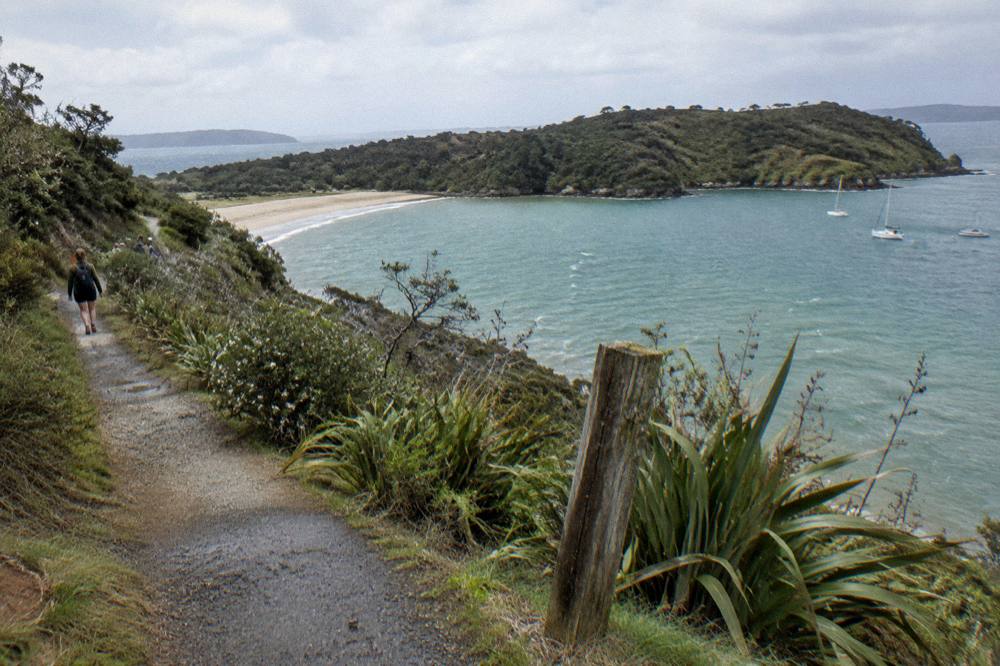
Not every cruise stops at Urupukapuka. The Island Getaway three-hour cruise stops at Roberton Island instead, with commentary, and the sailing tours run by Barefoot Sailing Adventures, Phantom Sailing, Vigilant Yacht Charters and Bayscapes Charters each list snorkel gear, with paddleboards on the Bayscapes cruise, kayaks on the Vigilant trip and catered lunches on the longer trips. The Urupukapuka Island cruises page compares those island stops side by side. On Bay Of Islands Dolphin Cruises, the dolphin-naming trips tend to bundle both halves of the day: the run out on the water, and an island hour where the swimming actually happens.
| Island stop | Which cruises | What the stop offers |
|---|---|---|
| Urupukapuka Island, Otehei Bay | Explore Group Hole in the Rock, Dolphins and Island Cruise; Discover the Bay cruise; Day in the Bay cream trip; kayak tours | Swim, walk, cafe in summer, about 1.5 hours on the longer cruises |
| Roberton Island | Island Getaway three-hour cruise | Remote island stopover |
| Two island stopovers | Island Getaway Hole in the Rock cruise; 4.5-hour day cruise | Wildlife spotting, bush walks, snorkelling |
| Wildlife sanctuary island | Barefoot Sailing Adventures Island Hopper sail | Two hours of island time, water activities, picnic lunch |
What Happens When A Cruise Boat Meets Dolphins?
The boat stops. Under the sanctuary rules a vessel within 300 m of any marine mammal must stop and stay stopped until the animal is more than 300 m away, so every close encounter happens from a stationary or slow vessel with you watching from the deck. DOC research suggests marine mammals tend to be beyond 300 m within a few minutes, so sightings are often brief windows rather than long sessions.
National marine mammal regulations add detail around that stop: no more than three vessels within 300 m of an animal, approaches from behind and to the side, no circling or cutting through a group, and no more than 10 knots when leaving. The Bay of Islands sanctuary layer takes priority locally, and its 300 m distance applies to all marine mammals, not only dolphins. That is why no cruise on this site offers anything other than watching from the boat. One listing goes further on credentials: Dolphins and Island Cruise ($90 per person, about 4.5 hours, Paihia or Russell) states its operator is licensed by the Department of Conservation to view marine mammals including bottlenose dolphins. Others, like the Eco Cruise, Marine Wildlife Focus at $97.47 per person, frame the trip as a marine wildlife lookout without naming licence details. Realistic expectations matter here: the local bottlenose population is small, common dolphins are seen without a precise count, and one sailing operator states plainly that sightings are common but cannot be guaranteed.
Which Cruise Gives You The Best Dolphin Watching Setup?
Four listings in the dolphin and Hole in the Rock category name dolphins in their own text: Dolphins and Island Cruise ($90), Dolphin Cruise, Island Lunch Included ($121), Eco Cruise, Marine Wildlife Focus ($97.47) and the full-day 8.5-Hour Day in the Bay Cruise ($127). All four depart from Paihia or Russell, so your base town does not force a choice.
Each suits a different traveller. Dolphins and Island Cruise runs about 4.5 hours on a purpose-built catamaran and adds about 1.5 hours at Otehei Bay, so you get a marine search plus an island beach stop. Dolphin Cruise, Island Lunch Included matches the 4.5-hour format with lunch on board and the same Otehei Bay stop, and its listing says that when conditions permit the boat can even travel through the Hole in the Rock. The Eco Cruise stretches to about 5.5 hours with a wildlife focus and the largest stated capacity at 100. The 8.5-Hour Day in the Bay Cruise is the only listing whose inclusions state a dolphin viewing and marine mammal guarantee, terms not quoted here, and it pairs that with an Urupukapuka stop where a cafe operates. Only one sighting guarantee exists across all 22 tours, and it belongs to that listing alone. Beyond these four, three sailing tours also mention dolphins in their descriptions, worth knowing if you prefer canvas to engines.
Common Questions About Dolphins On A Bay Of Islands Cruise
What Dolphins Live In The Bay Of Islands?
Bottlenose dolphins and common dolphins. Bottlenose dolphins are the closely monitored local population; common dolphins are described as abundant with no precise population estimate.
How Many Bottlenose Dolphins Are In The Bay Of Islands?
The NIWA autumn 2024 estimate is 40 individuals, with a 95 percent range of 27 to 58. The population was estimated at 244 in summer 1997 and fell to a low of 16 in summer 2019. DOC records 26 individual dolphins visiting the bay area in its 2020 data.
Can You Swim With Dolphins On A Bay Of Islands Cruise?
No. Swimming with dolphins is not permitted in the Bay of Islands. The Te Pewhairangi Marine Mammal Sanctuary keeps everyone out of the water within 300 m of any dolphin, whale or seal, and cruises are watching trips from the vessel.
Which Cruises Mention Dolphins In Their Descriptions?
Seven of the tours covered on this site name dolphins in their own text, including the Explore Group Dolphin Eco Cruise, the Explore Group Hole in the Rock, Dolphins and Island Cruise, the Discover the Bay cruise with island lunch, the Day in the Bay cream trip cruise and the R. Tucker Thompson tall ship day sail.
Is A Dolphin Sighting Guaranteed?
Only one tour states a guarantee: the Explore Group Day in the Bay cream trip cruise says its trip includes a dolphin viewing and marine mammal guarantee. No other tour promises a sighting, and dolphin numbers in the bay are low and closely monitored.
How Many Bottlenose Dolphins Live In The Bay Of Islands?
A NIWA study for DOC estimated 40 bottlenose dolphins in the Bay of Islands in autumn 2024, within a range of 27 to 58. That is down from 244 in summer 1997, with a low of 16 recorded in summer 2019. DOC data records 26 individual dolphins visiting the bay area from 2020 data.
With the species, the numbers and the rules in one place, choosing a cruise becomes a straightforward match of duration, price and boat style.